The short answer
Clean aluminium with a neutral-pH cleaner between pH 7 and 9 at 55–65 °C. Alkaline cleaners above pH 10 etch aluminium, leaving a dull grey surface and a chemically reactive face that blooms into white rust within days. Rinse clean and dry completely, including blind holes, before packing.
- Safe cleaner pH
- 7–9 (neutral)
- Damage threshold
- Above ~pH 10
- Wash temperature
- 55–65 °C
- Common alloys
- ADC10, ADC12, LM-series
- Measured rejection change
- 3.2% → 0.4%
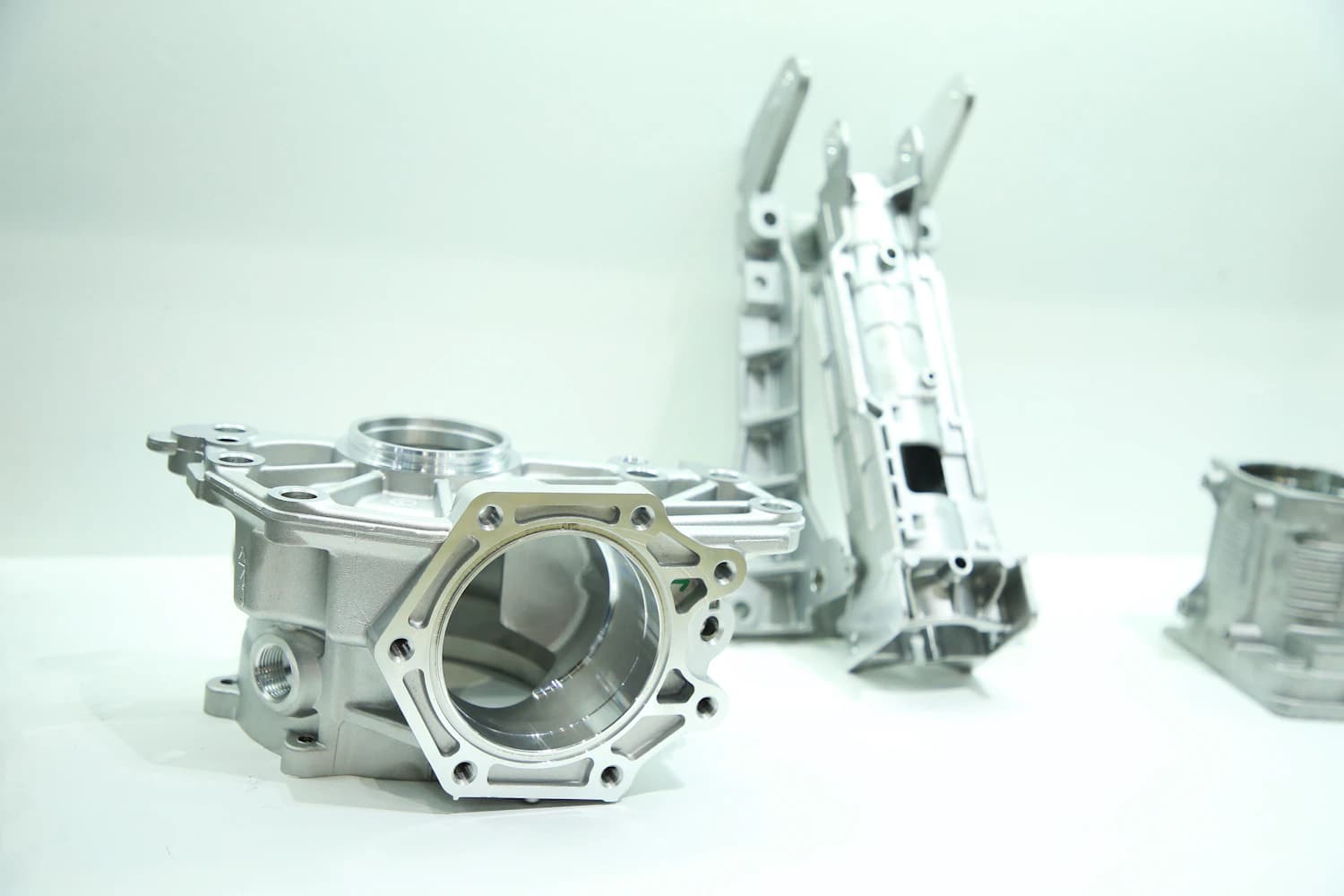
Aluminium is the metal that most often exposes a wrong cleaning decision, because it fails visibly and it fails at the customer rather than on your line. Parts come out of the wash looking acceptable, and two weeks later a white bloom has appeared in the packaging.
The underlying reason is that aluminium is amphoteric — it is attacked by strong alkali as well as by acid. Steel tolerates and slightly prefers high alkalinity. Aluminium does not, and the threshold is not far above neutral.
What alkalinity actually does to an aluminium part
Above roughly pH 10 the cleaner begins dissolving the natural oxide film and then the metal beneath it. The visible result is a dull grey or blotchy surface, sometimes with the silicon phase standing proud on ADC alloys as the aluminium matrix is removed preferentially around it.
The invisible result matters more. Etching leaves a freshly exposed, chemically active surface with no protective oxide. Add residual rinse water in a blind hole, seal it into a bag or a stacked bin, and you have built an ideal white-rust incubator. The bloom is aluminium hydroxide, and by the time it appears the part is usually a reject.
| Working pH | Cleaning power on oil | Effect on aluminium |
|---|---|---|
| 7–9 (neutral) | Good, surfactant-driven | No attack — correct choice |
| 9–10 | Strong | Marginal; risk rises with temperature and dwell |
| 10–12 | Very strong | Etching, dulling, silicon relief |
| Above 12 | Aggressive | Rapid attack, heavy staining |
The right chemistry: neutral pH, worked harder
Removing the alkalinity removes saponification as a cleaning route, so a neutral cleaner has to do more with surfactants and solvency. A well-formulated one cleans aluminium castings, brass bushings and copper assemblies as effectively as an alkaline product cleans steel — but it will not strip baked carbon or forging scale, and expecting it to is the second most common mistake here.
Power Clean NF-14 is the neutral-pH grade in the range, built for aluminium, zinc, brass and — importantly — for mixed baskets. A line that cleans steel housings and aluminium covers together has to run neutral, even though the steel would slightly prefer alkaline.
Brightening dull or stained castings
Once a casting is etched or stained, cleaning will not restore it — the surface has been removed. An aluminium brightener, which is a mildly acidic formulation, dissolves the discoloured surface layer and restores an even finish. It is a corrective treatment, not a routine wash stage.
Brightening removes metal, so it changes dimensions marginally and cannot be repeated indefinitely on a finished part. It also leaves the surface freshly reactive, which means the rinse, dry and protection sequence afterwards has to be right or the part will bloom again quickly.
Drying is half the process
Even with correct chemistry, aluminium parts packed damp will develop white rust. Castings are full of blind holes, pockets and porosity, and all of them hold rinse water. Sealed into packaging, that water creates a humid microclimate against a light metal — which is the entire recipe.
A drying agent in the final rinse helps considerably: by lowering surface tension it makes water sheet off rather than bead, so less water is left behind and what remains flashes off faster. On hot parts leaving a 60 °C rinse, that can be enough to eliminate a separate drying stage.
What changing chemistry is actually worth
On aluminium die-cast housings, Power Clean field data records white-rust rejection falling from 3.2% to 0.4% after switching from an alkaline cleaner to neutral-pH NF-14 with a controlled drying stage. On any volume line, that difference is far larger than the price gap between the two chemicals.
Send a sample casting and tell us your current cleaner and pH. The lab will confirm whether the chemistry, the drying, or both are causing the bloom.
Request an aluminium trialFrequently asked questions
What pH cleaner is safe for aluminium?
Neutral, between pH 7 and 9. Above roughly pH 10, cleaners dissolve aluminium's protective oxide and then attack the metal, leaving a dull etched surface that is chemically reactive and prone to white rust.
Why do aluminium parts turn dull grey after washing?
The cleaner etched them. Alkaline chemistry removes the oxide film and preferentially attacks the aluminium matrix, which on ADC alloys can leave the silicon phase standing proud. The finish cannot be washed back — it needs a brightener, or better, a neutral cleaner from the start.
Can I clean aluminium and steel in the same bath?
Yes, with a neutral-pH cleaner. The chemistry must suit the most sensitive metal in the basket, so a mixed load sets a pH ceiling of about 9. Steel cleans perfectly well at neutral pH; aluminium does not survive alkaline.
What is an aluminium brightener and when is it needed?
A mildly acidic formulation that dissolves a discoloured or oxidised surface layer to restore an even finish. It is corrective, not routine — it removes metal, so it changes dimensions slightly and cannot be repeated indefinitely on a finished part.
How do I stop white rust on aluminium castings?
Three things together: a neutral-pH cleaner, a clean rinse, and genuinely dry parts before packing — including blind holes and porosity. Power Clean field data shows that combination cutting white-rust rejection from 3.2% to 0.4%.