
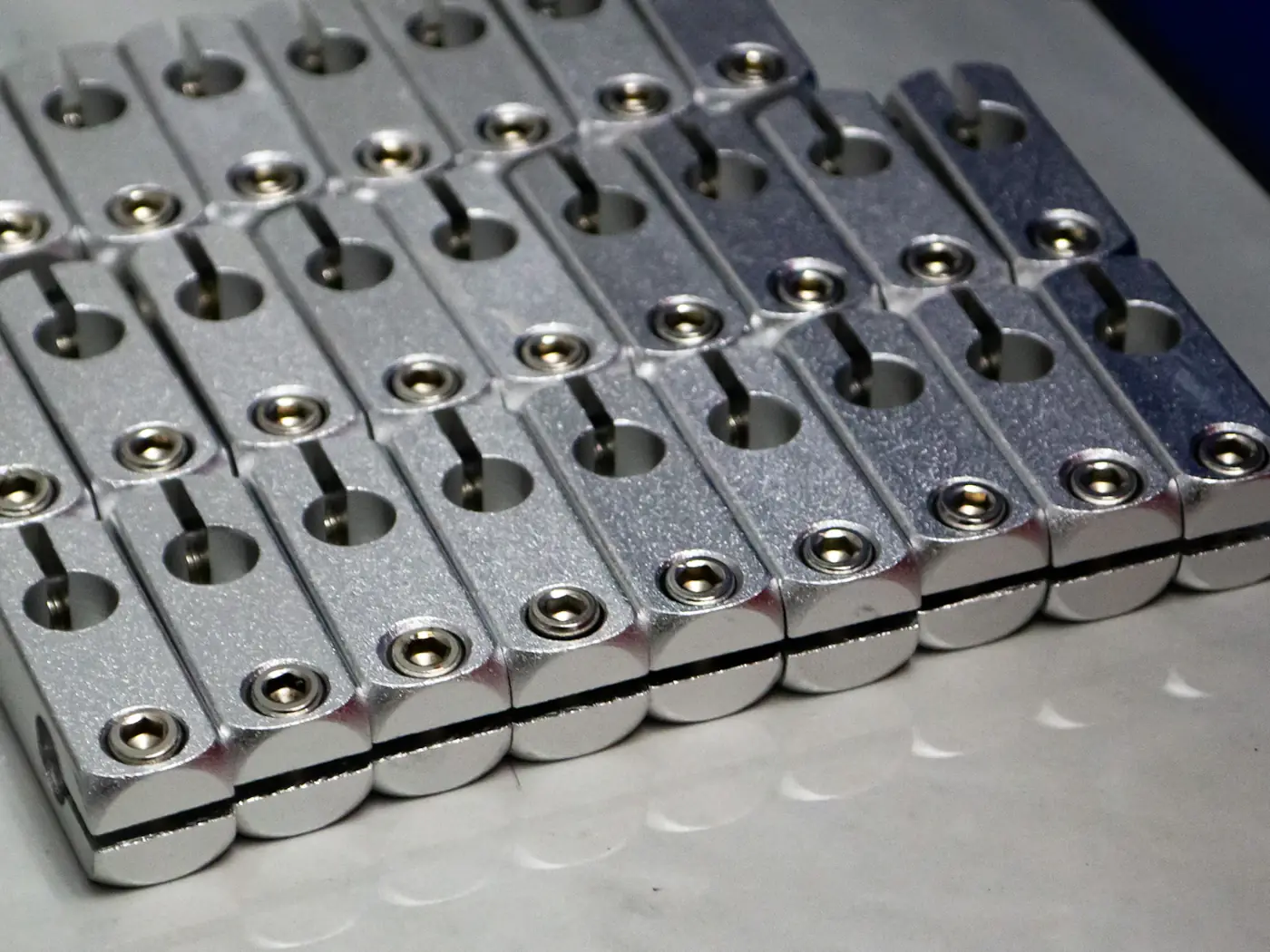
Cleaning Chemicals for Cookware & Home Appliance Manufacturing
Cookware and appliance work is judged by eye as much as by function. A part that would ship happily out of a machine shop becomes a reject when it carries a water spot, a dull etched patch or a fingerprint under a gloss finish — and everything downstream of the wash has to survive painting or coating adhesion.
The short answer
Cookware and appliance manufacturing cleans aluminium and stainless cooker bodies, tawas, saucepans and sauté pans, along with pressed steel panels and copper tubing, to a cosmetic standard before coating. That needs neutral-pH chemistry for the aluminium, alkaline degreasing for the steel, and a deionised final rinse — because a water spot that would pass on a machined part is a visible reject on a pan.
- Concentration
- 1–4%
- Wash temperature
- 55–65 °C
- Final rinse
- DI, below 10 µS/cm
- Critical stage
- Spot-free drying before coating
- Packing
- 20 L to 1000 L
The Home Appliance & Cookware Failure Modes
These are the problems we are called in for most often in this sector — and what causes each one.
Cosmetic surfaces show every fault
Water spots, streaks and etch marks that nobody would notice on a machined face are visible rejects on a painted panel or a bright trim part. That pushes the specification onto the rinse and the dry, not just the cleaner.
Pre-paint adhesion
Any residue left on the surface — cleaner film, drawing compound, dissolved solids from a hard-water rinse — becomes an adhesion failure after coating. It usually shows up as blistering weeks later, at the customer.
Mixed metals on one line
Pressed steel panels, aluminium castings and copper tubing frequently run through the same wash. Alkalinity that suits the steel will etch the aluminium and tarnish the copper, so the chemistry is set by the most sensitive metal present.
Drawing and forming compound
Press shops leave persistent lubricant films that ordinary light-duty cleaning will not shift. They need adequate surfactancy and dwell, and they load a bath fast without skimming.
Cookware is deep-drawn aluminium, then coated
Cooker bodies, tawas and pans are drawn and spun from aluminium, so they carry heavy forming lubricant on a metal that alkaline cleaner etches. Anything left on the surface — lubricant, cleaner film or dissolved solids from a hard rinse — shows up later as a non-stick or hard-anodised coating that lifts. Neutral pH and a deionised final rinse are not optional here.
What We Recommend
Where It Is Used
- Cooker body and pressure cooker cleaning
- Tawa and griddle cleaning
- Saucepan and sauté pan degreasing
- Deep-drawing and spinning lubricant removal
- Pre-coating cleaning for non-stick and hard-anodised finishes
- Pressed steel panel cleaning
- Pre-paint and pre-coating degreasing
- Drawing and forming compound removal
- Aluminium component cleaning
- Copper and brass tubing cleaning
- Spray wash cleaning
- Bin and tray washing
Home Appliance & Cookware Cleaning — FAQ
Why do appliance panels show water spots after washing?
Because the rinse water carries dissolved solids that stay on the part when the water evaporates. Mains water in Indian industrial areas commonly runs 300–800 µS/cm. A deionised final rinse below 10 µS/cm, ideally with a drying agent so water sheets off rather than beading, removes the cause.
What cleaner should be used before painting?
One that leaves no residue of its own. Any film left behind — cleaner, drawing compound or dissolved solids from a hard rinse — becomes an adhesion failure after coating. Rinse quality matters as much as the wash chemistry here.
Can steel panels and aluminium parts share a wash?
Yes, with a neutral-pH cleaner. The chemistry has to suit the most sensitive metal in the load, so one aluminium part sets a pH ceiling of about 9 for the whole bath. Steel cleans perfectly well at neutral pH; aluminium does not survive alkaline.
Which cleaner suits aluminium cookware — cooker bodies, tawas and pans?
A neutral-pH cleaner such as Power Clean NF-14. Aluminium cookware is deep-drawn or spun, so it arrives carrying heavy forming lubricant, but the metal itself will not tolerate the alkalinity that would shift that soil quickly on steel. Alkaline cleaner etches aluminium, dulls the surface and leaves a grey smut that shows through a coating. Neutral pH with adequate temperature and dwell does the same job without attacking the metal.
How clean does cookware need to be before a non-stick coating?
Residue-free, and the test is adhesion rather than appearance. Forming lubricant, cleaner film or dissolved solids left by a hard-water rinse all sit between the metal and the coating, and the failure shows up as lifting or blistering after the customer has been using the pan. A deionised final rinse below 10 µS/cm followed by a spot-free dry is the usual specification.
Run a Trial on Your Home Appliance & Cookware Line
Send a sample part with your soil and wash equipment details. The lab matches a formulation and returns a dosing and trial plan before anything ships in volume.
Prefer to talk? Call +91-9731727868WhatsApp us